Why coconut water and not juice or milk
A smoothie needs liquid before the blender can get any grip at all. Juice brings plenty of sweetness and its own aroma, milk makes everything heavy and round. Coconut water does neither. Coconut water tastes only lightly sweet, has a short finish and covers nothing up — there's more on that in the article on what coconut water actually is. For the blender, that means the fruit decides the flavour, not the base.
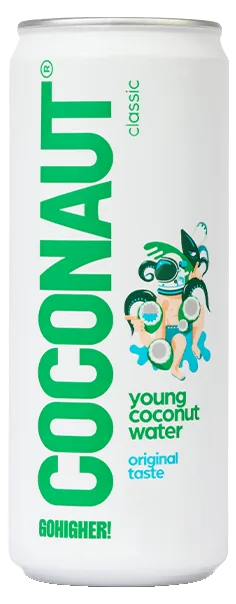
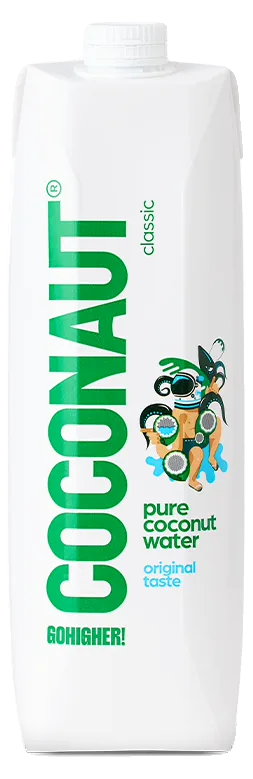
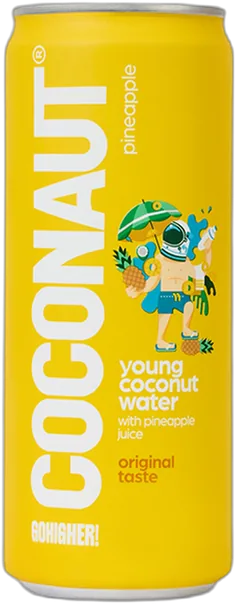
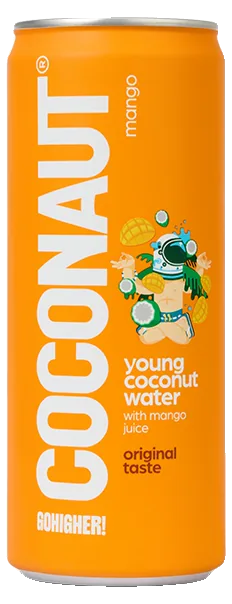
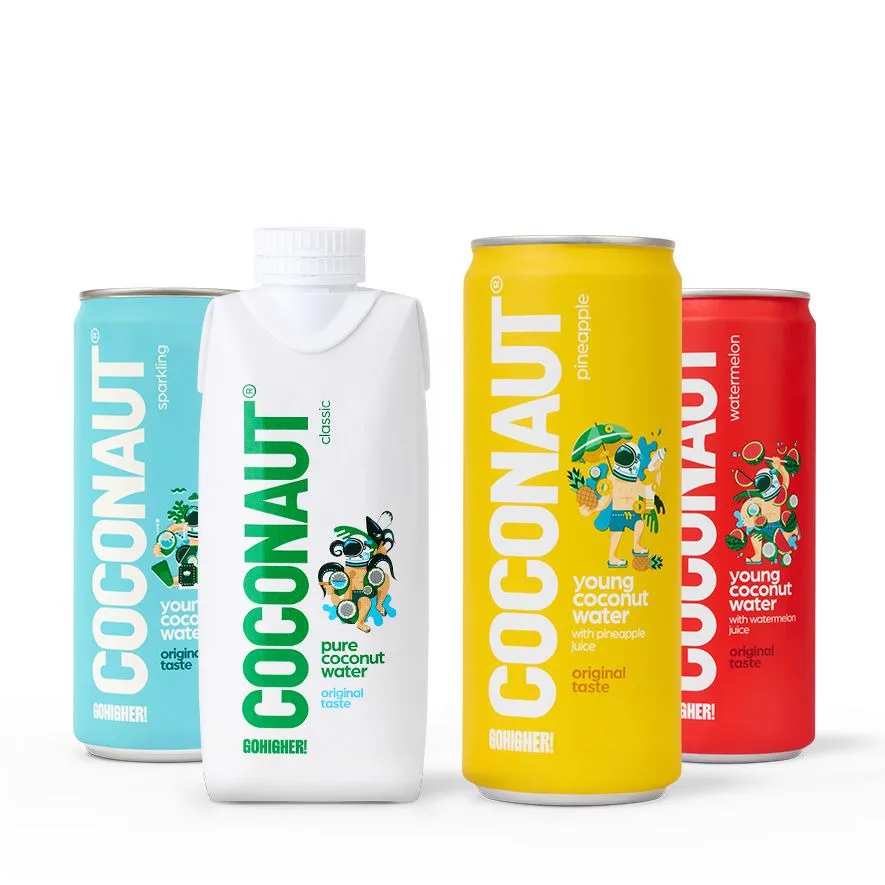
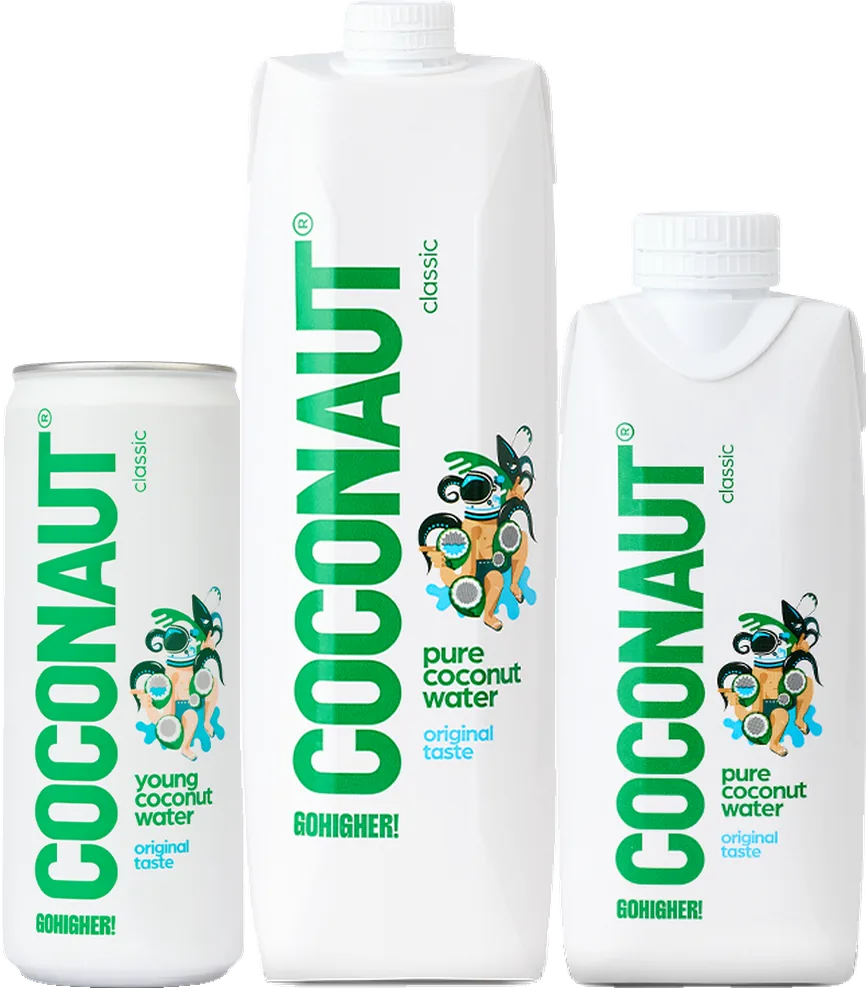
One can of Classic 320 ml is enough for a single portion. Anyone blending for several people, or doing it often, reaches for Classic 1000 ml: the litre pack is UHT-treated and mild in taste. Anyone who wants it fruitier from the start swaps the base for Pineapple or Mango — both contain 20% fruit juice and give the smoothie a direction of its own.
Green: kiwi, spinach, avocado and oats
For one portion: 1 can Classic 320 ml, 1 kiwi (peeled, in pieces), 1 handful baby spinach, 1/2 avocado (diced), 1/4 cup rolled oats, the juice of half a lime, a few ice cubes if you like.
Coconut water first into the blender, then kiwi, spinach, avocado and oats, the lime juice last. Blend until nothing is chunky any more. The result is creamy and dense, with the kiwi's sharpness sitting on top; the oats make it thick, the avocado soft. It is more a breakfast you drink than a drink. You barely taste the spinach — it is mainly there for the colour.
Apple, spinach and lemon: the smoothie for the bottle
For one to two portions: 2 cans Classic 320 ml, 3 apples, 2 handfuls baby spinach, the juice of half a lemon, 1/2 avocado if you like.
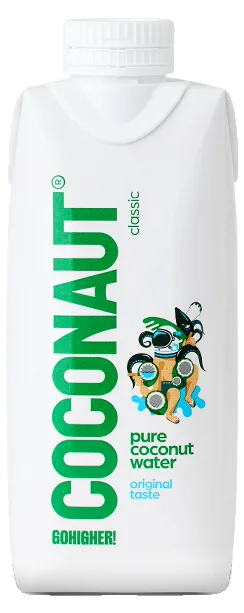
Core and dice the apples, add them to the blender with spinach, lemon juice and coconut water, and blend hard until everything is smooth. Without avocado the smoothie stays thin and drinks like a cloudy apple juice — just right for the bottle. With avocado it turns thick and becomes more something for a spoon. Poured into a resealable bottle, it is ready in five minutes and travels to the office, to university or on a day out. Cold from the fridge, it tastes clearest. For anyone who doesn't want to blend at all: Classic 330 ml has a screw cap and fits neat into the same bag.
Pineapple, banana and spinach
For one portion: 1 can Classic 320 ml, 1 cup pineapple pieces (fresh or frozen), 1 banana, the juice of half a lime, 1 handful baby spinach, a few ice cubes.
Coconut water into the blender, then pineapple, banana, lime juice and spinach, and blend until creamy. Add the ice cubes and blend briefly again. The banana binds it, the pineapple brings sweetness and tartness at once; frozen pineapple makes the smoothie thicker and colder, fresh makes it juicier. Pour into a tall glass and garnish with a piece of pineapple or a few mint leaves. Anyone who swaps the base for Pineapple reinforces exactly this direction.
Kiwi, avocado and mint
For one portion: 1 can Classic 320 ml, 2 kiwis (peeled, diced), 1/2 avocado, 1 tablespoon honey, a few fresh mint leaves, a few ice cubes.
Blend coconut water, kiwi, avocado and honey until smooth, then add the mint and ice and blend again briefly. This is the creamiest of the five: the avocado carries it, the kiwi pushes back with its sharpness, the mint only comes through at the end. Serve with kiwi slices and a mint leaf. The honey means this recipe isn't vegan; anyone who cares leaves it out or sweetens with maple syrup — with ripe kiwi you barely need it anyway.
Raspberry, yoghurt and desiccated coconut
For one portion: 1 can Classic 320 ml, 1/2 cup raspberries, 1/2 cup natural yoghurt, 1 tablespoon desiccated coconut, 1 tablespoon honey, a few ice cubes.
Blend everything except the ice into a creamy mass, then add the ice cubes and blend until smooth. The yoghurt makes this smoothie thick and lightly tart, the raspberries turn it pink, the desiccated coconut stays noticeable as a fine texture. Scatter a little desiccated coconut over it to serve. With yoghurt and honey, this recipe isn't vegan either; a plant-based yoghurt and maple syrup change that without the consistency suffering.
Consistency, chill and leftovers
The order in the blender is always the same: coconut water first, then the soft ingredients, the ice last. That way the blades get a grip straight away. Too thick? Pour in more coconut water, a splash at a time. Too thin? Half a banana, a piece of avocado or a spoonful of oats will thicken it without shifting the flavour. Frozen fruit replaces the ice cubes and dilutes nothing.
Smoothies taste best straight after blending, and cold. Anyone preparing ahead should keep them in a sealed bottle in the fridge and shake before drinking, since the pulp and the liquid separate. Opened coconut water also belongs in the fridge: use Classic 330 ml within a day, Classic 1000 ml within three days. More on that in the article on storing and serving.
Frequently asked questions
Which coconut water works best for smoothies?
The pure one: Classic 320 ml for a single portion, Classic 1000 ml for several. Both are 100% coconut water and bring no fruit note of their own. Pineapple and Mango, with 20% fruit juice, suit it when the smoothie is meant to go in exactly that direction.
Can I replace the coconut water in the smoothie with juice or milk?
Yes, but the smoothie will taste different. Juice makes it sweeter and louder, milk heavier and rounder. Coconut water stays in the background and lets the fruit stand on its own.
Are the five recipes vegan?
The coconut water itself is vegan and V-Label certified. Three of the recipes are too: the green smoothie, the one with apple and spinach, and the one with pineapple and banana. Kiwi-avocado-mint contains honey, raspberry-yoghurt also contains natural yoghurt; maple syrup and a plant-based yoghurt replace both.
How much coconut water does a smoothie need?
One can of Classic 320 ml for a single portion — that's the amount in all five recipes. If the smoothie turns too thick, pour in a splash more; if it turns too thin, half a banana, a piece of avocado or a spoonful of oats will thicken it.