The lines to look for on any pack
A nutrition table usually carries the same lines: energy in kJ and kcal, carbohydrate with “of which sugars” underneath, fat, protein and salt, each per 100 ml. The values apply to 100 ml, not to the pack; anyone who wants the whole can works it out — times 3.2 for 320 ml, times 2.5 for 250 ml. For the comparison, always take the 100 ml column.
The ingredient list sets out what's inside. On our lists, the ingredient with the largest share comes first — on Sparkling, for instance, coconut water 99.36% ahead of carbon dioxide 0.6%. Additives carry their function before the colon and the substance after it: “antioxidant: L-ascorbic acid”. When counting, each substance counts once; the function label doesn't. On energy drinks, caffeine is usually given as a milligram figure per 100 ml on the pack. Where that figure is missing, the ingredient list shows whether a caffeine-containing ingredient is present — coffee extract, for example.
Our values per 100 ml
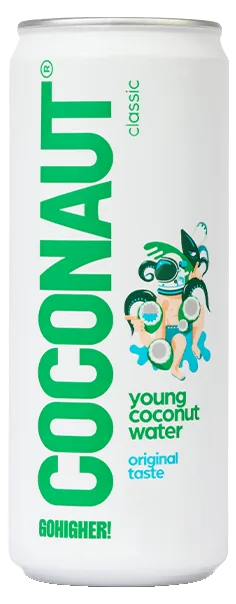
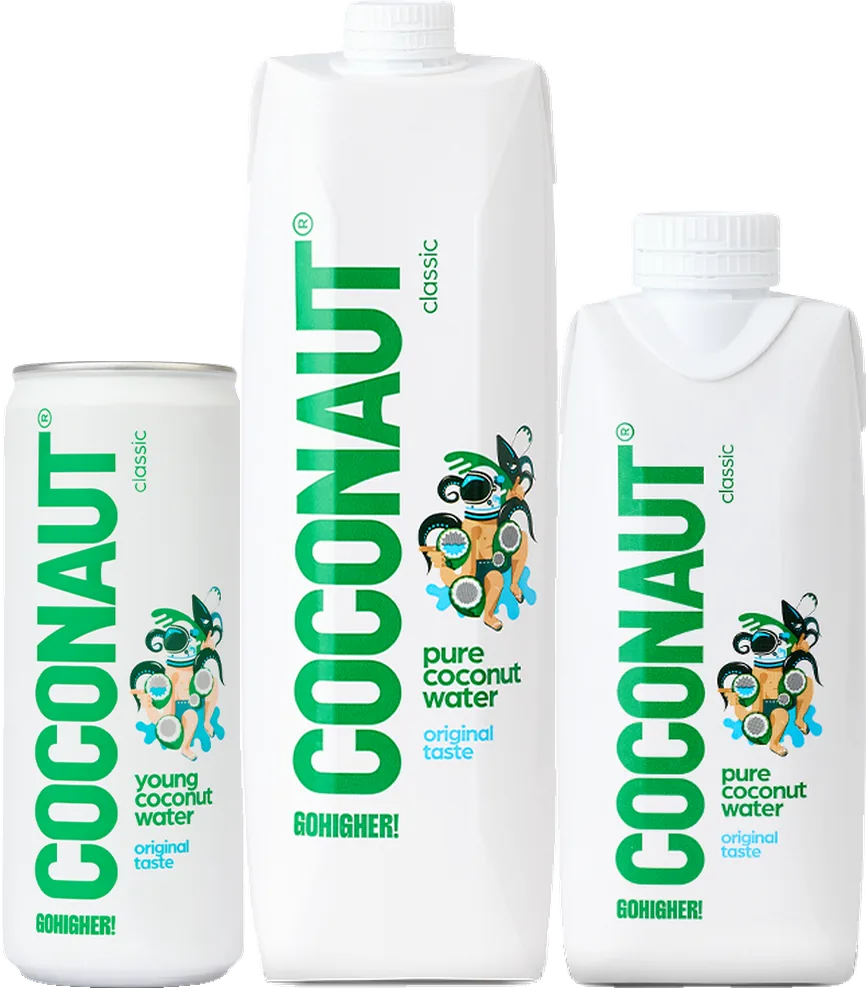
Classic 320 ml, the can: energy 92 kJ / 22 kcal, sugar 5.2 g, salt 0.05 g, one ingredient, no caffeine on the list.
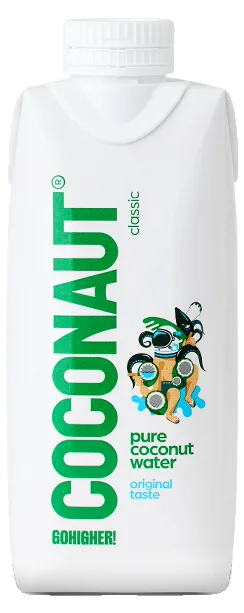
Classic 330 ml, the Tetra Pak with a screw cap: energy 63 kJ / 15 kcal, sugar 2.9 g, salt 0.08 g, one ingredient, no caffeine on the list.
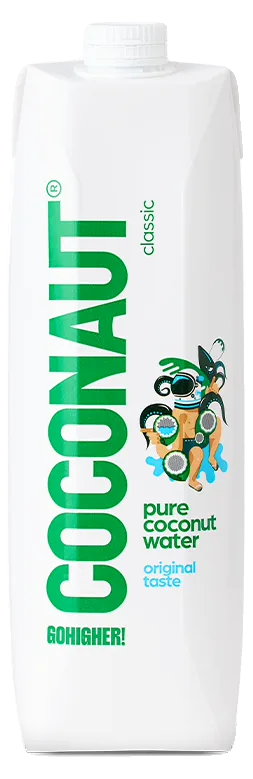
Classic 1000 ml, the litre pack: the same declaration as the smaller Tetra Pak, energy 63 kJ / 15 kcal, sugar 2.9 g, salt 0.08 g, one ingredient, no caffeine on the list.
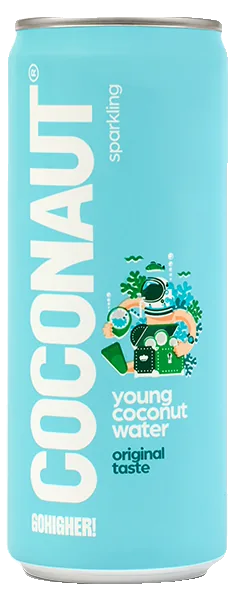
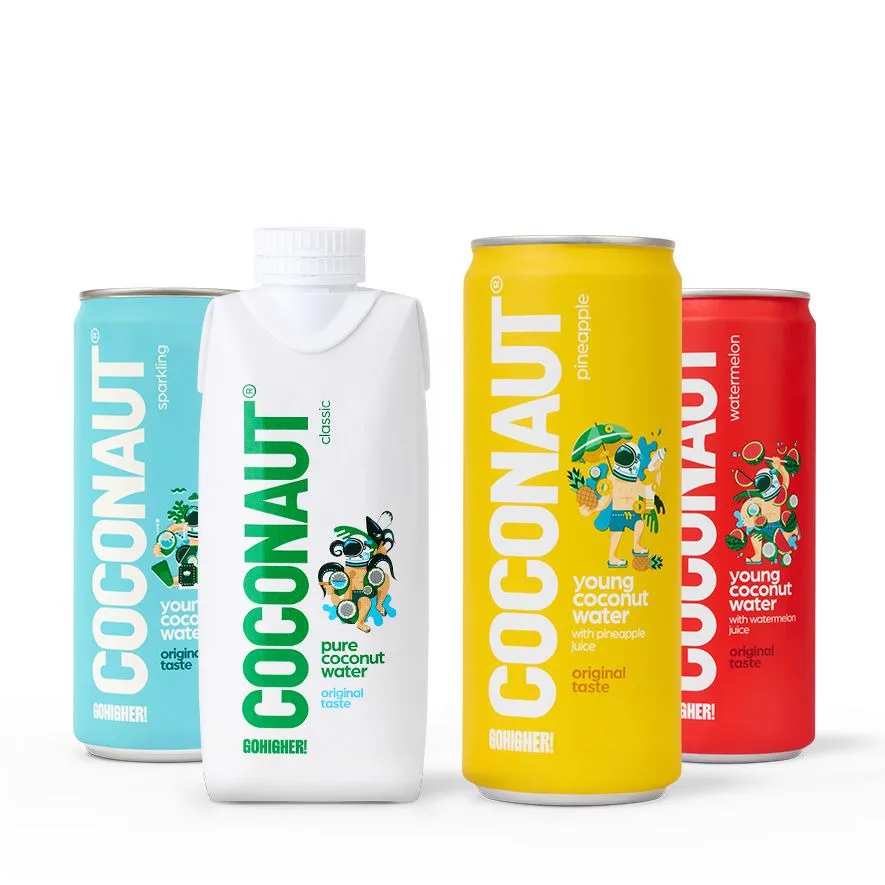
Sparkling: energy 94 kJ / 22 kcal, sugar 5.3 g, salt 0.06 g, three ingredients, no caffeine on the list.
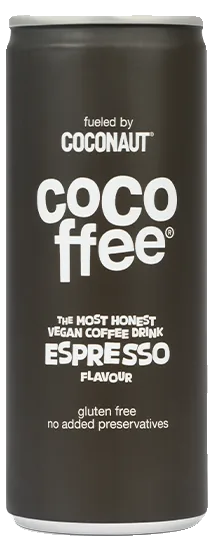
Cocoffee Espresso: energy 250 kJ / 60 kcal, sugar 4.1 g, salt 0.11 g, eight ingredients, including coffee extract 3.4%. A caffeine figure in milligrams doesn't appear in our product data.
The remaining lines: fat and protein stand at 0 g for the four coconut waters in this piece; Cocoffee Espresso declares 3.3 g fat, of which 2.9 g saturates, and 0.6 g protein. Carbohydrate: 5.5 g in the can, 3.6 g in the two Tetra Paks, 5.5 g for Sparkling, 6.9 g for Cocoffee Espresso. All figures come from our product data and apply per 100 ml. Which ingredients sit behind the sugar line is shown by the ingredient list in the next section.
The ingredient lists from our product data
Classic 320 ml, Classic 330 ml and Classic 1000 ml carry the same list: “Coconut water 100%.” One entry, no additive. The water is not from concentrate; what stands behind that process is explained in the article on NFC.
Sparkling: “Young coconut water 99.36%, carbon dioxide 0.6%, antioxidant: L-ascorbic acid.” Three entries: two ingredients with a percentage and one additive, where the functional class stands before the colon and the substance after it. What carbonation changes about the taste is covered in the article on the plain varieties.
Cocoffee Espresso: “Coconut water 56.06%, coconut drink 36.5%, coffee extract 3.4%, emulsifier: sucrose esters of fatty acids, stabilisers: carrageenan, guar gum, acidity regulator: sodium carbonate, coffee flavouring.” By the same rule, eight entries: three ingredients with a percentage, four additives across three functional classes, one flavouring.
On caffeine, our product data states exactly one thing: coffee extract 3.4%. No milligram figure appears there, so we give none; a figure that isn't in our product data doesn't belong in this piece. The can holds 250 ml, comes in a pack of 24, is shaken before use, and once opened is drunk within 24 hours. More on the line is in the article on COCOFFEE® and MOISO®.
Can and Tetra Pak: one ingredient, two declarations
The can declares 5.2 g sugar and 22 kcal per 100 ml, the Tetra Pak 2.9 g and 15 kcal, with a word-for-word identical ingredient list. For salt it runs the other way: 0.05 g in the can, 0.08 g in the Tetra Pak. The two are kept stable in different ways: the can sterilised, the Tetra Pak UHT-treated. Why the sugar line and the salt line come out that way is not something we work through here. What you can compare are the two columns, exactly as they stand.
On the formats: Classic 320 ml comes in a pack of 20, Classic 330 ml with its screw cap in a pack of 12, Classic 1000 ml in a pack of 6. Once opened, all three belong in the fridge — the can for 2 days, the small Tetra Pak for 1 day, the litre pack for 3 days. More on the formats and on refrigeration is in the articles on can, carton and litre pack, and on storing and serving.
The column for the energy drink and the sports drink
You fill this column yourself, at the shelf, with the pack in your hand. We don't print figures from someone else's label: recipes change, and what's binding is the declaration on the pack you're actually holding.
The process is the same as above. For the energy drink: the “of which sugars” line and the “energy” line in the 100 ml column, the “salt” line, the milligram figure for caffeine if one is given, then count through the ingredient list, each substance once, functional classes not counted. Same for the sports drink; where the milligram figure is missing, the ingredient list shows whether a caffeine-containing ingredient is present. Read from the exact variety you're holding.
After that, the figures and the ingredient lists sit side by side: ours from this piece, the others from the packs. That's the whole comparison. What you make of it is your call at the shelf.
Frequently asked questions
How much sugar does Coconaut coconut water have per 100 ml?
For the four varieties in this piece, per our product data: Classic 320 ml declares 5.2 g, Sparkling 5.3 g, Classic 330 ml and Classic 1000 ml 2.9 g each, per 100 ml. The ingredient list for Classic 320 ml, Classic 330 ml and Classic 1000 ml consists of one entry, coconut water 100%.
Does Coconaut coconut water contain caffeine?
No, none of the four varieties in this piece: the ingredient lists for Classic 320 ml, Classic 330 ml and Classic 1000 ml carry a single entry, per our product data — coconut water 100%; Sparkling lists coconut water, carbon dioxide and an antioxidant. Cocoffee Espresso is a coffee drink and contains coffee extract 3.4%; a milligram figure is not in our product data.
How many calories does a can of Classic 320 ml have?
22 kcal per 100 ml is declared. Worked out for the whole can, that's 22 times 3.2, so around 70 kcal.
What nutrition values do the Tetra Pak and the can declare?
Per our product data, Classic 330 ml and Classic 1000 ml in the Tetra Pak declare 15 kcal, 2.9 g sugar and 0.08 g salt per 100 ml; Classic 320 ml in the can declares 22 kcal, 5.2 g sugar and 0.05 g salt. The ingredient list of all three reads: coconut water 100%.
Where does the caffeine content appear on an energy drink?
Usually as a milligram figure per 100 ml on the pack. Set that figure next to our ingredient lists: those for Classic 320 ml, Classic 330 ml, Classic 1000 ml and Sparkling carry no caffeine-containing ingredient; Cocoffee Espresso lists coffee extract 3.4%.