The detour through concentrate
Drinks travel more cheaply once the water has been taken out of them. Heating turns juice or coconut water into a concentrate at a fraction of the volume. Water goes back in at the destination.
Reducing a liquid costs it some of its volatile aroma compounds. Concentrates are therefore often given aroma back — technically clean, but a reconstruction as far as taste is concerned.
The direct route
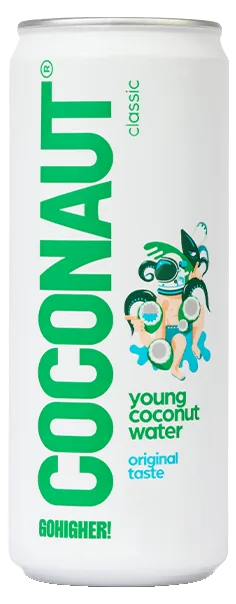
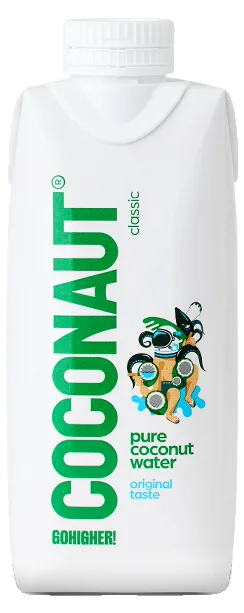
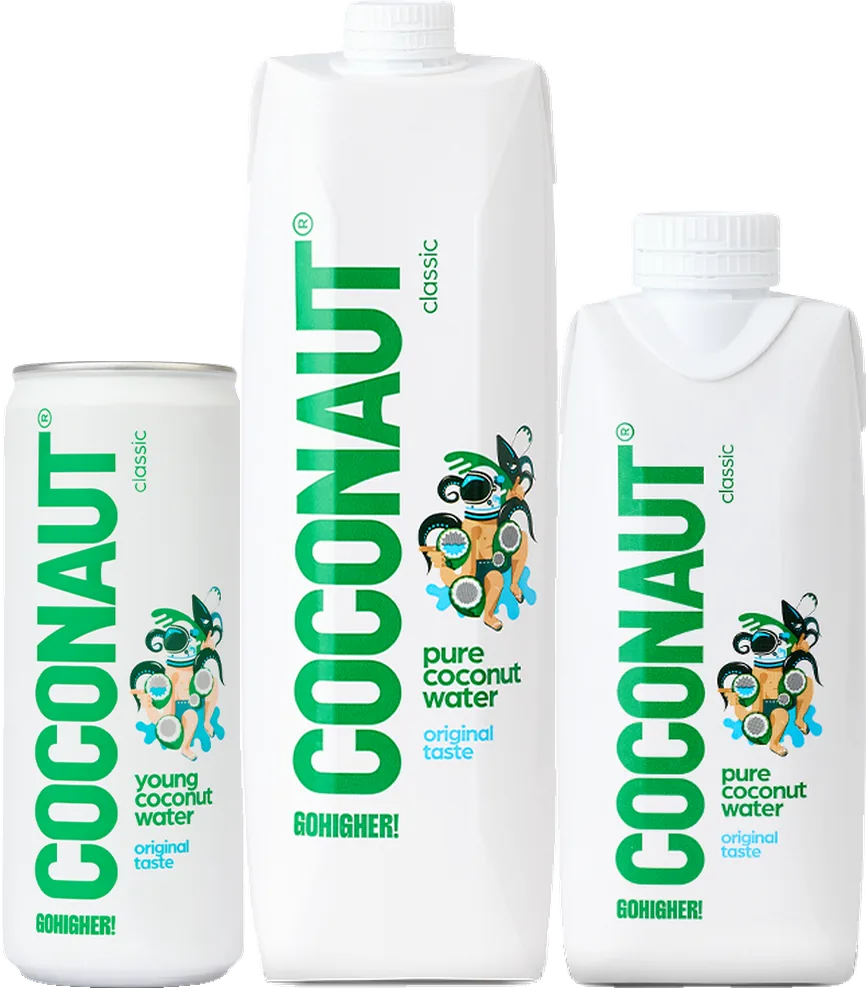
NFC skips that detour. The coconut water is filled straight after the nut is opened; it is made shelf-stable by heat — sterilised in the can, UHT-treated in the Tetra Pak. It is never reduced and never diluted again.
That is harder on logistics — you are shipping all the water as well — and it is why NFC products are rarely the cheapest on the shelf.
What you notice
The difference shows less in sweetness than in length. NFC coconut water has a rounder, less sharp attack and a finish that tastes of the nut rather than of flavouring.
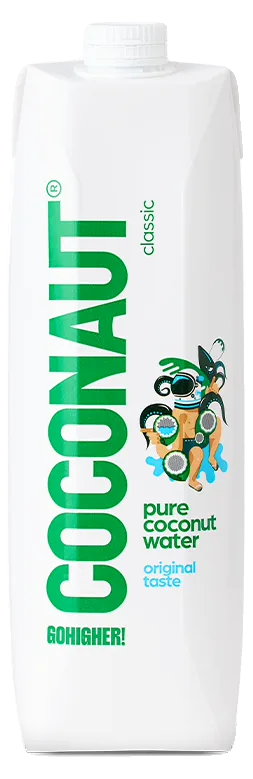
Taste them side by side and most people spot it on the second sip. The litre pack suits that well, because it pours more than once.
Frequently asked questions
What exactly does NFC stand for?
“Not From Concentrate”: the drink was never reduced to a concentrate and then made up again with water.
Is NFC regulated by law?
Labelling fruit juice made from concentrate is required in Switzerland and the EU. “NFC” itself is an industry term for the directly filled product.
Are all Coconaut varieties NFC?
Yes. Both the plain coconut water and the juice share of the fruit varieties are made without concentrate.