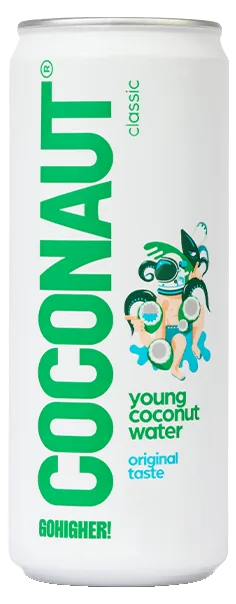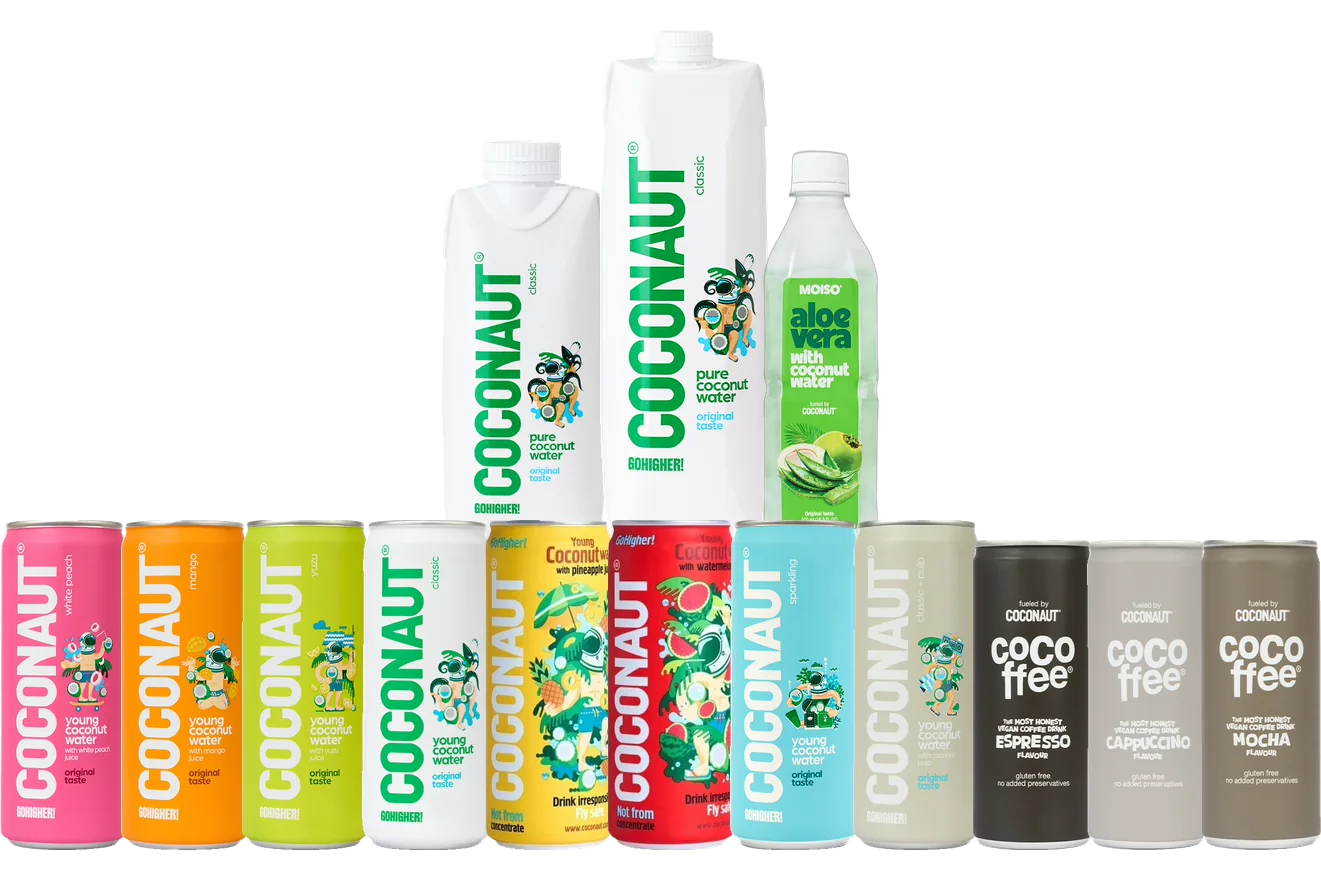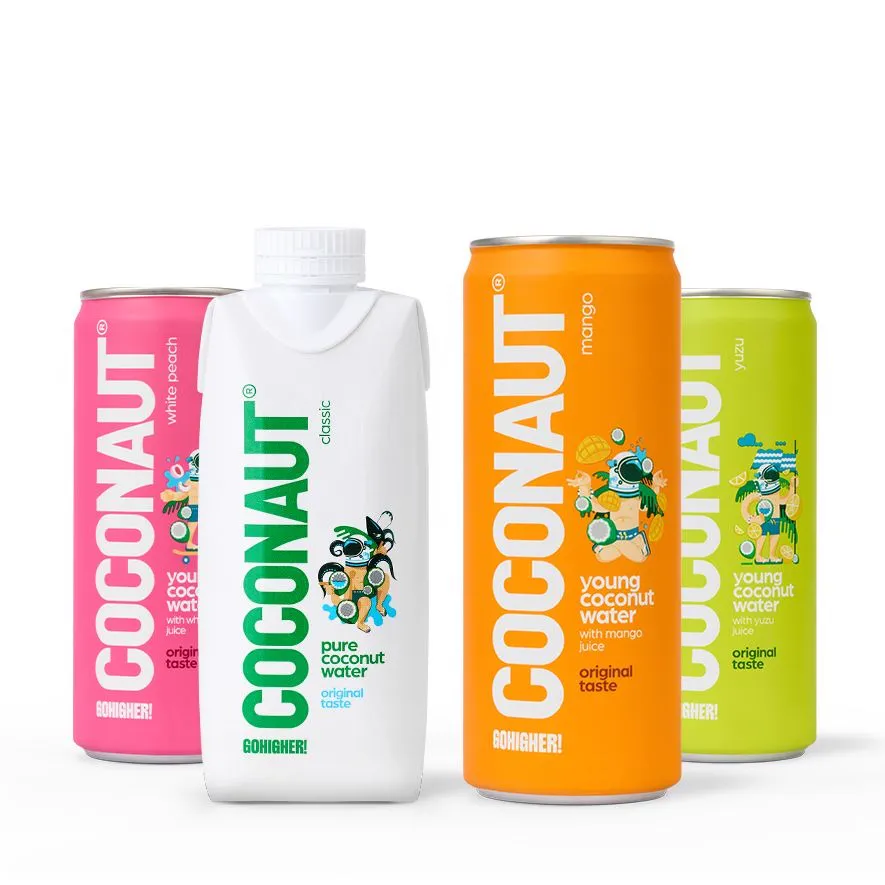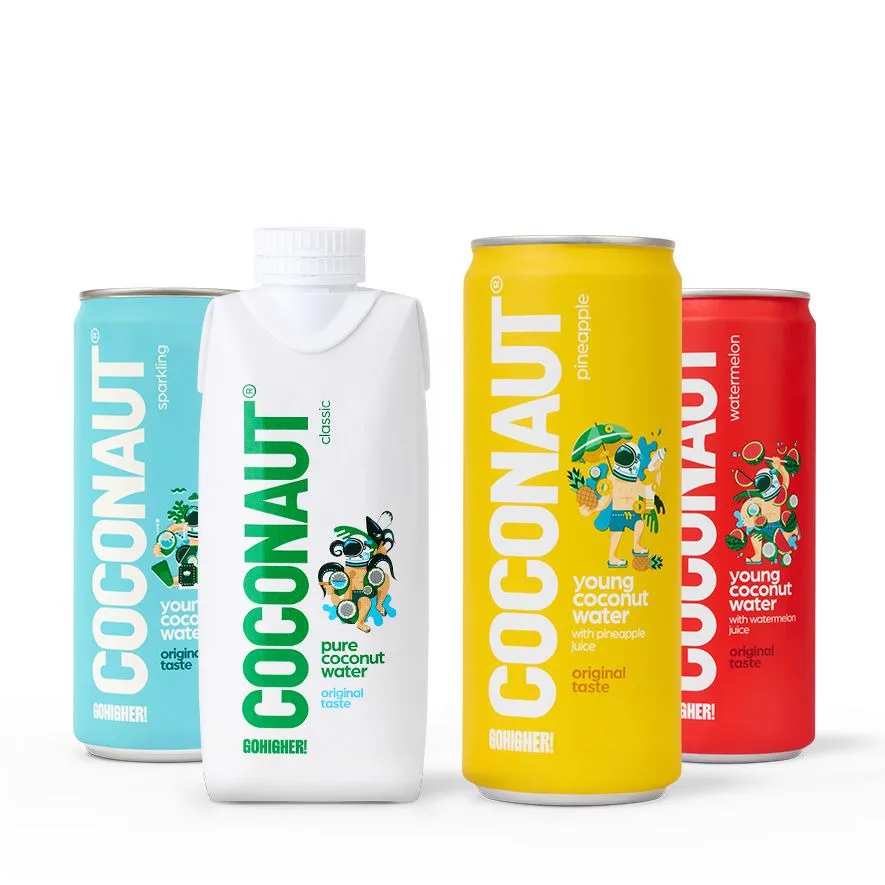
Classic: the reference point
One hundred per cent coconut water, never from concentrate, no added sugar (contains naturally occurring sugars). One ingredient, one taste. Classic is both the best-selling product and the yardstick for everything else in the range.
In the 320 ml can it takes its most practical form: one serving, cold, nothing left over.
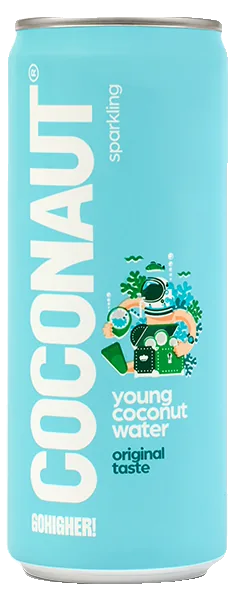
Sparkling: the same, carbonated
Carbonation changes perception rather than taste. The attack turns drier, the fine sweetness steps back, the drink reads as fresher. At the dinner table Sparkling is therefore often the better choice.
If you drink sparkling mineral water and have so far found coconut water too soft, this is where to begin.
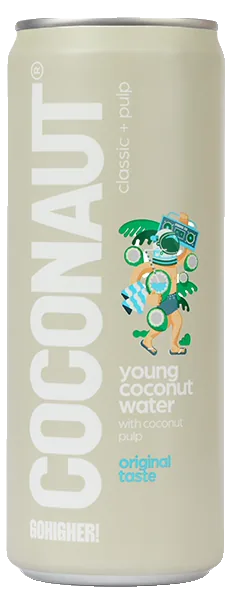
Pulp: texture instead of aroma
This variety carries fine pieces of the young coconut flesh into the drink. The taste stays where it was; what changes is the mouthfeel — a drink becomes a small something.
Swirl it briefly before opening so the pieces spread out. Best drunk from a glass rather than from the can.
Frequently asked questions
Is Sparkling sweetened?
No. Sparkling is coconut water with carbonation and no added sugar (contains naturally occurring sugars).
What is the pulp in the pulp variety?
Fine pieces from the soft inside of a young coconut — the same nut the water comes from.
Which of the three is best for cooking?
Classic. It brings neither carbonation nor pieces and can therefore be used most freely.