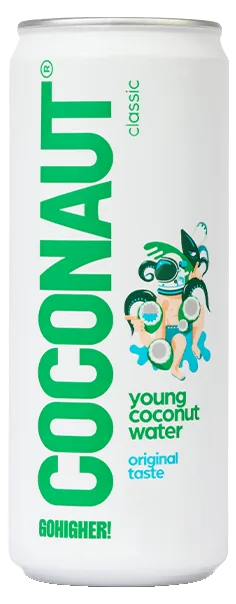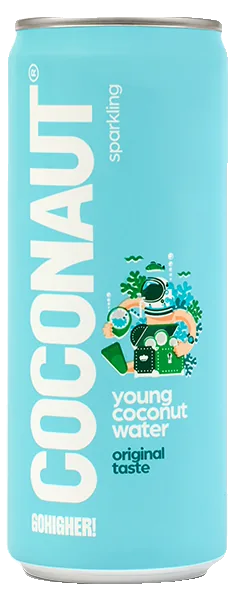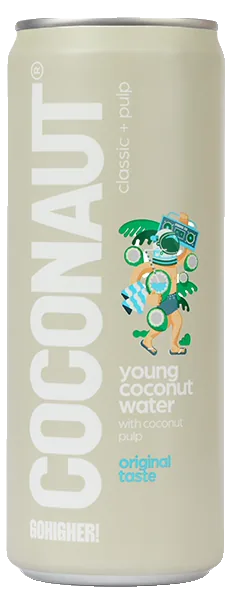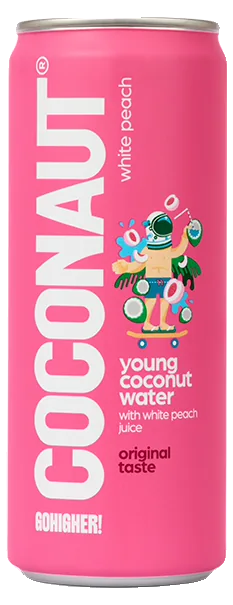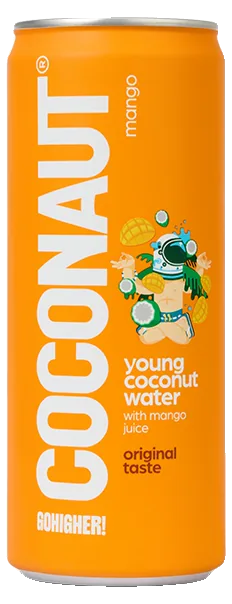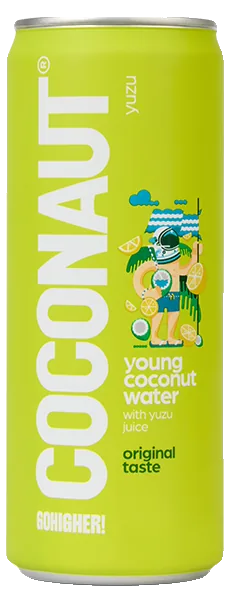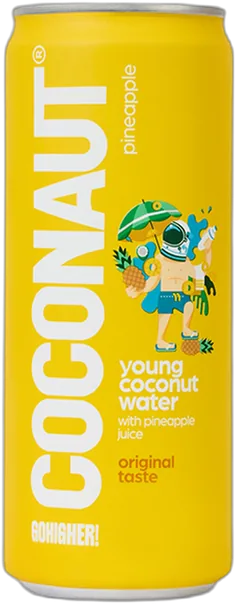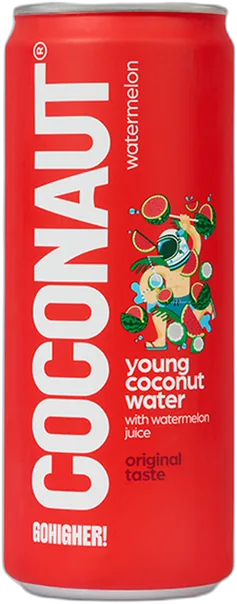
The original first
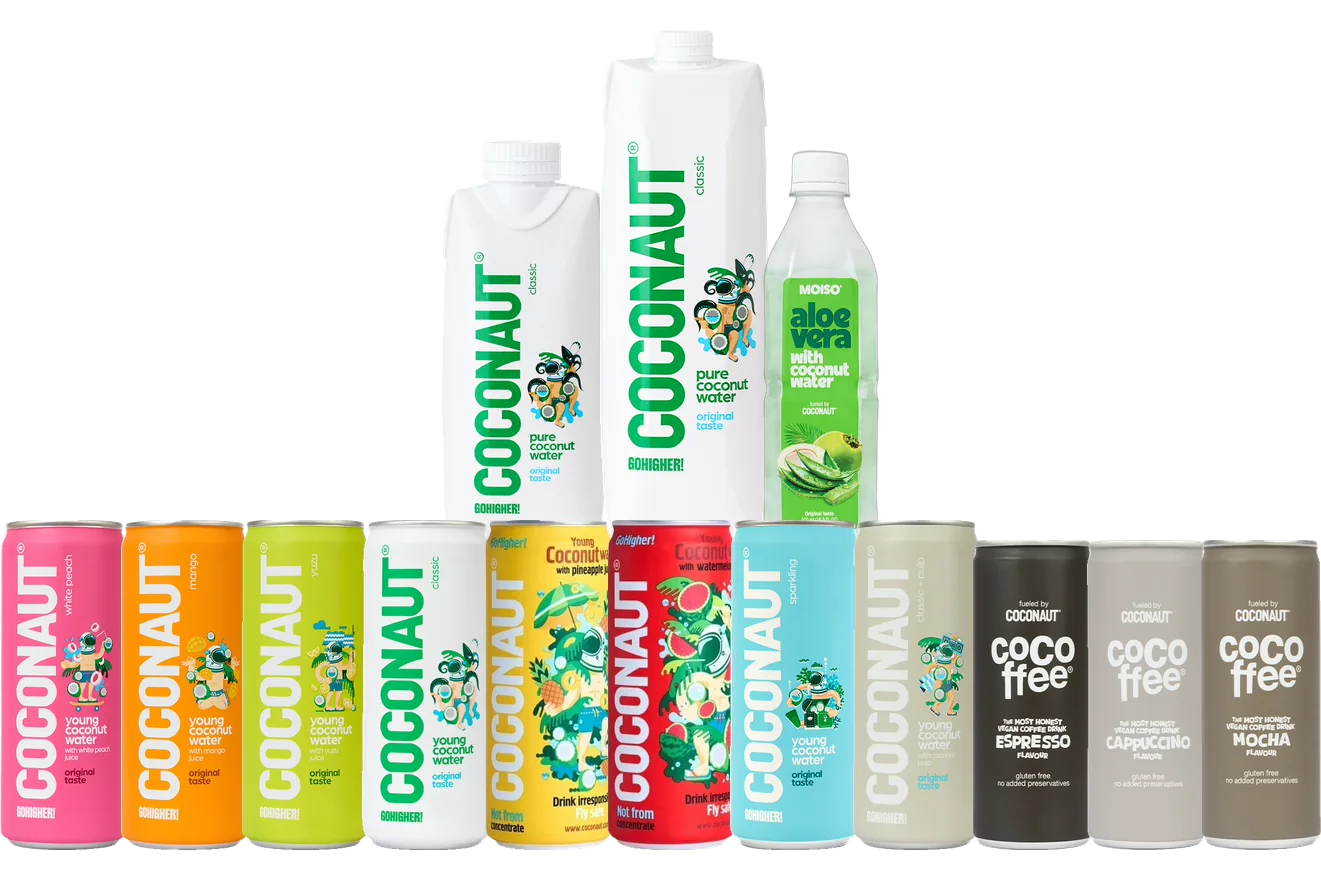
Classic is the variety every other one is measured against: 100% coconut water, nothing else. If you want to know what the nut tastes like, start here — plenty of people also stay here.
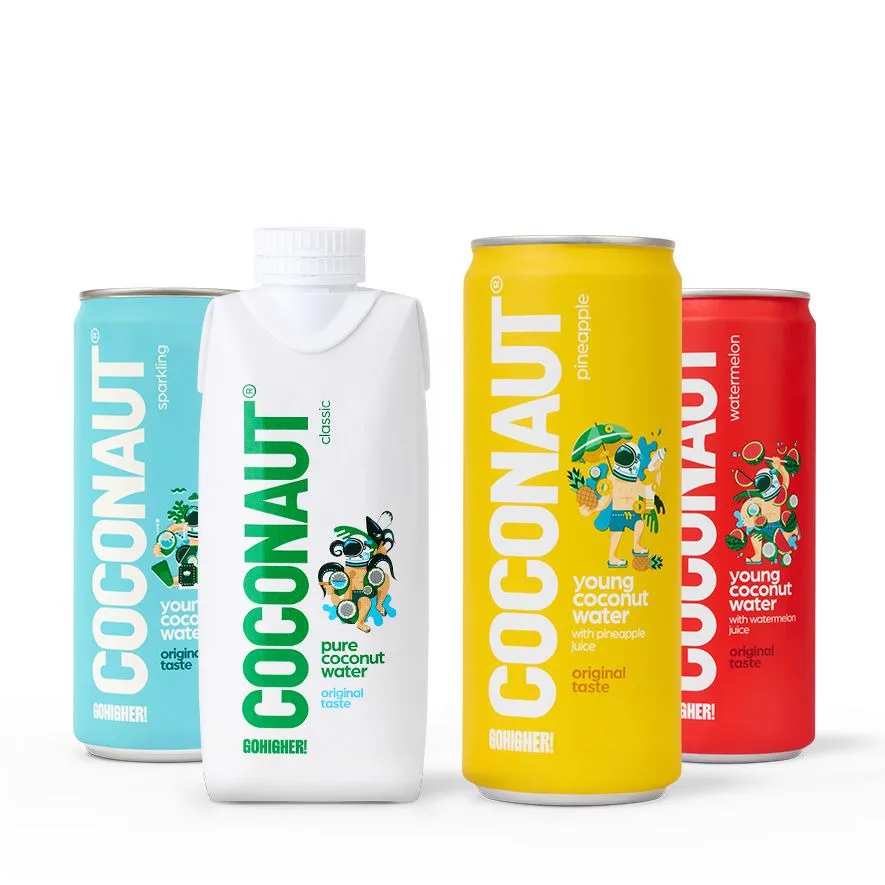
Sparkling is the same coconut water, carbonated. The attack turns fresher and drier while the finish stays. The pulp variety adds fine pieces from the young nut and turns a drink into something with texture.
The fruit varieties
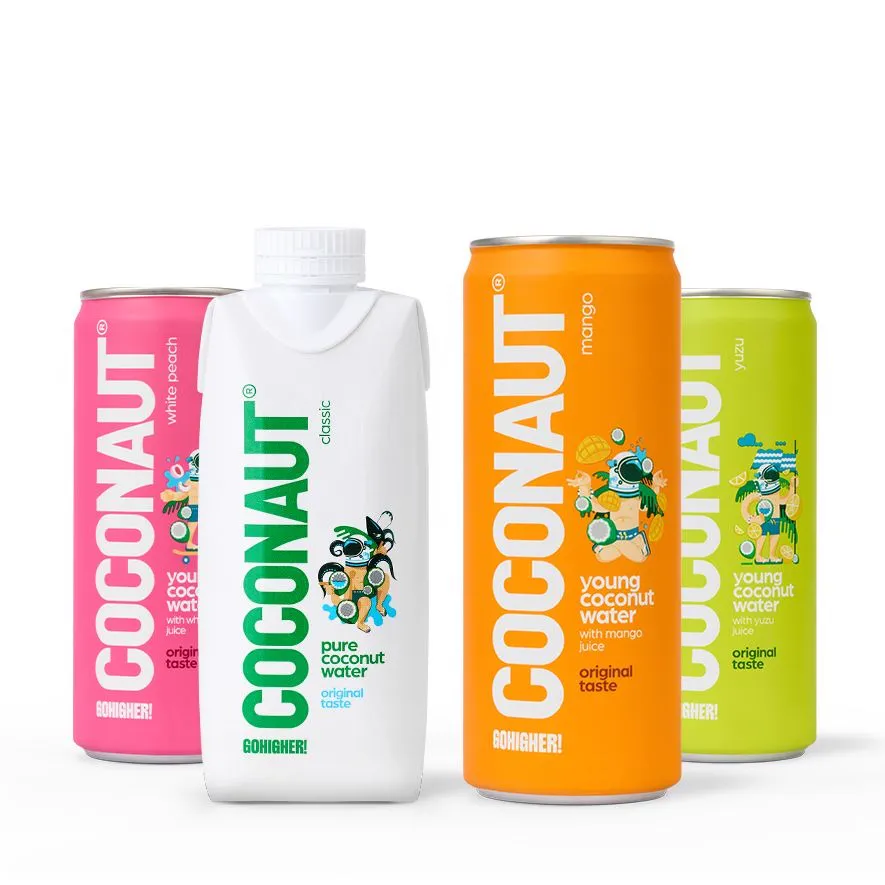
White peach is the most restrained: floral, soft, barely tart. Mango is the roundest and most tropical. Yuzu brings a clear citrus point, far more sharply drawn than lemon.
Pineapple sits between sweet and tart and tastes the most like summer. Watermelon is the most delicate of them all — short, clean, almost no finish. All of them are 80% coconut water and 20% fruit juice, never from concentrate.
Which suits whom
New to coconut water? Take Classic or white peach. Drinking it with food? Sparkling or yuzu will serve you well. For children, mango and watermelon work most reliably.
They all come in packs of 20. If you would rather not choose, start with a mixed pack and sort it out later.
Frequently asked questions
Which Coconaut varieties are there?
In the 320 ml can: Classic, Sparkling and pulp without fruit juice, plus white peach, mango, yuzu, pineapple and watermelon with 20% fruit juice. COCOFFEE® and MOISO® stand alongside them as separate lines.
How much fruit juice do they contain?
The fruit varieties are 20% fruit juice and 80% coconut water.
Do the fruit varieties contain added sugar?
No. The sweetness comes from the fruit juice and the coconut water itself; both contain naturally occurring sugars.